


Understanding the Differences Between IP55 and IP65 Motors: Protection and Applications
Cleantek using various kind of induction motor in our centrifugal blowers, Ring Blowers. The following are the some useful information about induction motor.
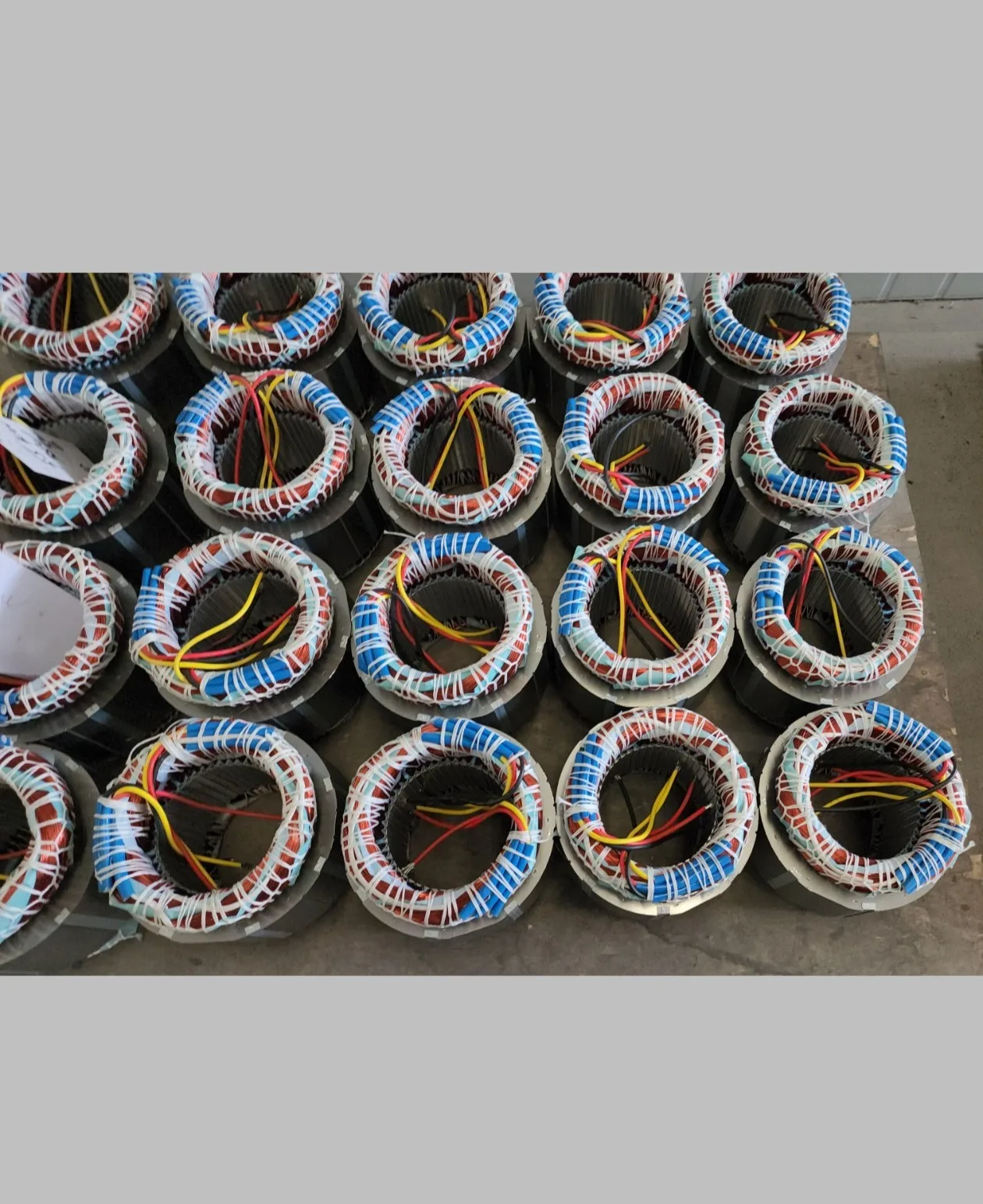
An induction motor is an electric motor that operates on the principle of electromagnetic induction. It is widely used in various industrial and commercial applications due to its robustness, simplicity, and efficiency. The motor consists of two main parts: a stator (stationary part) and a rotor (rotating part). When current flows through the stator, it generates a rotating magnetic field that induces current in the rotor, causing it to turn and perform mechanical work.
IP55 and IP65 refer to the Ingress Protection (IP) ratings of the motor, which indicate how well the motor is protected from dust and water.
IP55 motors offer protection against dust ingress (limited entry, no harmful deposits) and are resistant to water jets from any direction, making them suitable for environments with moderate dust and moisture exposure.
IP65 motors provide a higher level of protection, being completely dust-tight and fully resistant to water jets, making them ideal for harsh environments where there is a high risk of both dust and water exposure.
The following are the main difference between IP65 and IP55 Motors.
Feature | IP55 Motor | IP65 Motor |
| Ingress Protection | Protection against dust and water | Protection against dust and water |
| Dust Protection | Dust protected (limited ingress of dust, but no harmful deposit) | Totally dust tight (no ingress of dust) |
| Water Protection | Protection against water jets from any direction | Protection against water jets from any direction |
| Water Pressure Resistance | Low-pressure water jets (6.3mm nozzle at 12.5 liters/min) | Higher pressure water jets (6.3mm nozzle at 12.5 liters/min) |
| Applications | Suitable for environments with moderate dust and moisture exposure | Suitable for harsher environments with higher dust and moisture exposure |
| Common Use Cases | Industrial applications, HVAC systems, outdoor use in moderate conditions | Harsh outdoor environments, food processing, chemical plants, marine environments |
| Seal Integrity | Protected against dust, but not fully sealed | Fully sealed against dust and water |
| Maintenance | Requires periodic checks for dust accumulation | Less frequent maintenance due to superior sealing |
