


Baghouse Dust Collector for Foundries and Activated Carbon Manufacturing Industry
Baghouse Dust Collector for Foundries and Activated Carbon Manufacturing Industry:
India's industrial landscape is evolving rapidly, especially in major manufacturing regions like Delhi NCR, Gujarat, Maharashtra, and Rajasthan. With rapid industrial growth comes an equally important responsibility-effective industrial pollution control.
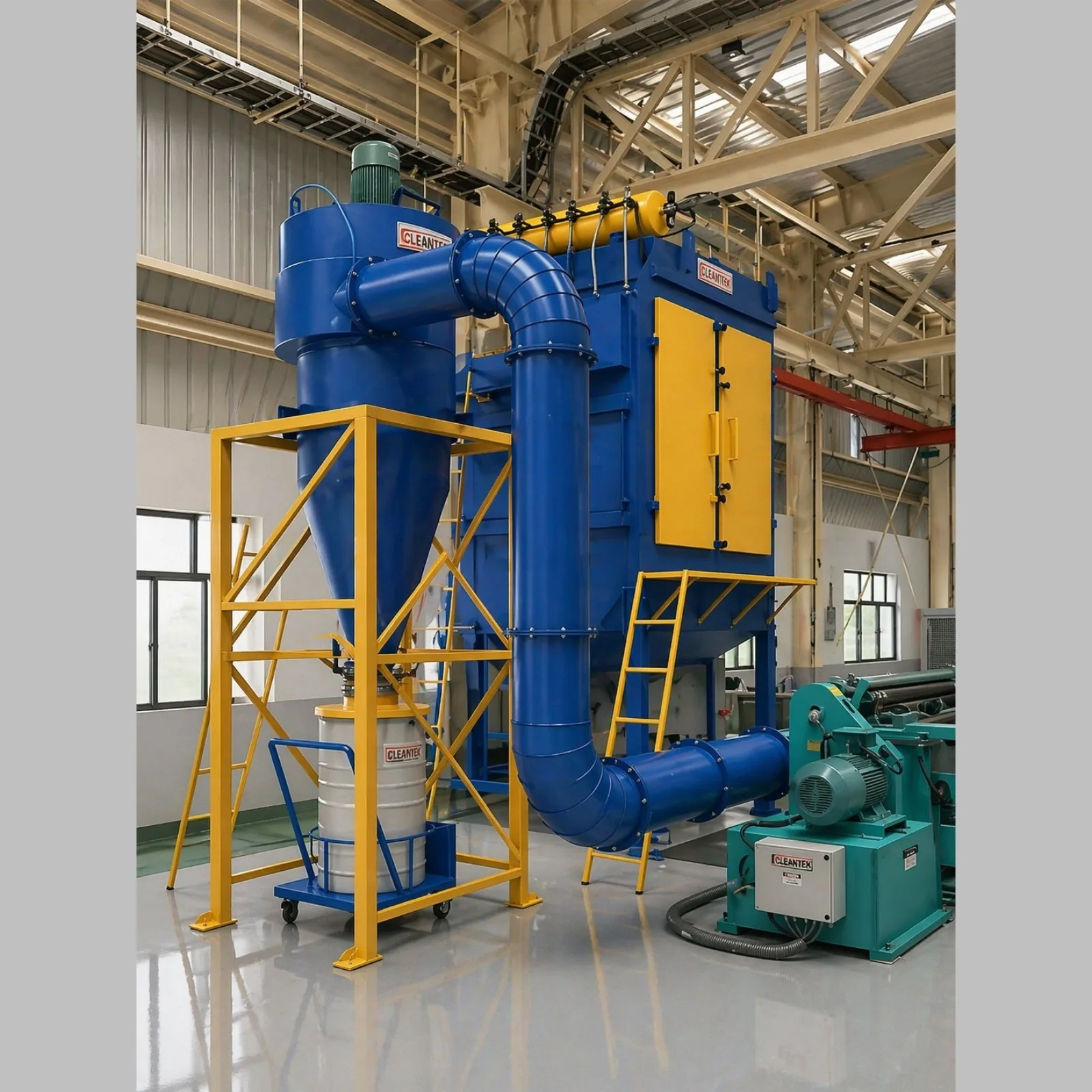
Today, pollution control is no longer just about meeting pollution control board norms. It is about ensuring smooth plant operations, protecting worker health, reducing equipment breakdowns, and building a sustainable industrial brand.
Major Pollution Control Laws for Industries:
1. Air (Prevention and Control of Pollution) Act, 1981
This law controls emissions of:
- Dust / Particulate Matter (PM)
- Smoke
- SO?'' (Sulphur Dioxide)
- NOx (Nitrogen Oxides)
- VOCs (Volatile Organic Compounds)
- Fumes and toxic gases
Industries must install proper Air Pollution Control Equipment (APC) like:
- Baghouse Dust Collectors
- Wet Scrubbers
- Cyclone Separators
- ESP (Electrostatic Precipitators)
- Fume Extraction Systems
Non-compliance can result in penalties, closure notices, or sealing of units. Recent enforcement actions in Maharashtra included sealing of plants for missing dust suppression systems and open raw material handling.
At Cleantek, we see industries moving beyond basic compliance toward engineered, high-performance dust collection solutions.
Industries such as foundries, activated carbon manufacturing, cement plants, steel units, chemicals, and pharmaceuticals generate heavy particulate emissions. Without proper dust control systems, this leads to:
• Regulatory penalties
• Equipment damage and downtime
• Unsafe working conditions
• Reduced product quality
• Environmental pollution
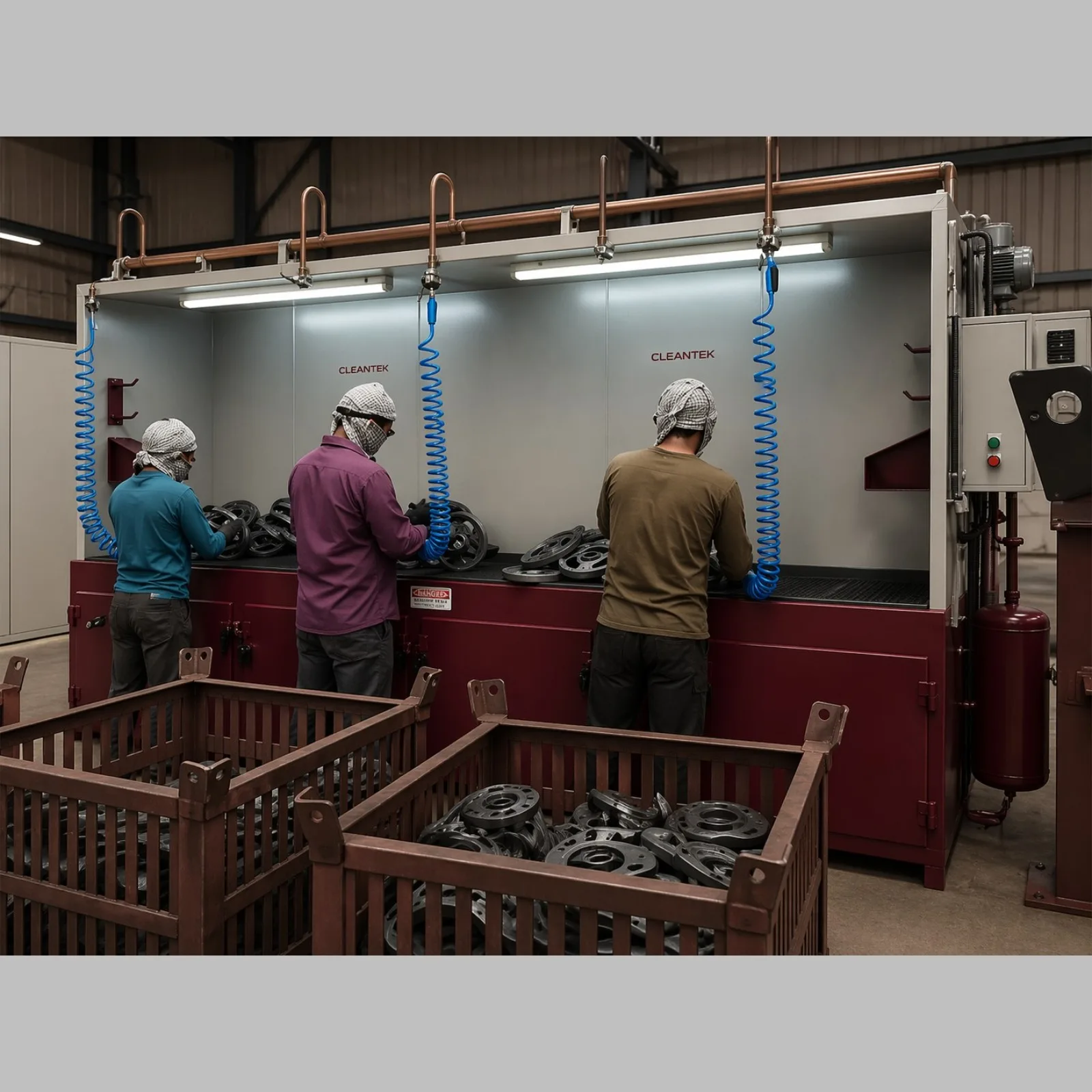
This is where engineered systems like:
• Baghouse Dust Collectors
• Wet Scrubbers
• Cyclone Separators
• Electrostatic Precipitators (ESP)
play a major role.
Baghouse Dust Collectors - The Preferred Solution:
Among all particulate control technologies, baghouse dust collectors (fabric filter systems) have become the most preferred and reliable solution for foundries and activated carbon industries.
How Baghouse Dust Collectors Work:
Dust-laden air is captured from process points through hoods and ducting and passed through specially designed filter bags. Dust particles are trapped on the filter media surface, while clean air is released to the atmosphere. The collected dust is discharged through a hopper system using rotary valves or screw conveyors.
This ensures continuous and efficient operation with minimal environmental impact.
Applications in Foundries:
Foundry industries generate large quantities of dust during:
• Sand preparation
• Moulding operations
• Fettling and grinding
• Shot blasting
• Furnace charging
• Casting shakeout
• Metal finishing processes
Fine silica dust, metal particles, and heavy particulate loads require high-efficiency dust collection systems.
Why Foundries Need Baghouse Systems:
• Controls fine silica and metallic dust
• Protects operators from hazardous exposure
• Prevents dust settlement on machines
• Improves product quality
• Helps maintain statutory compliance
• Supports continuous plant operation
Pulse Jet Bag Filters are highly preferred in foundries because of their compact design and continuous automatic cleaning system.
Applications in Activated Carbon Manufacturing Industry:
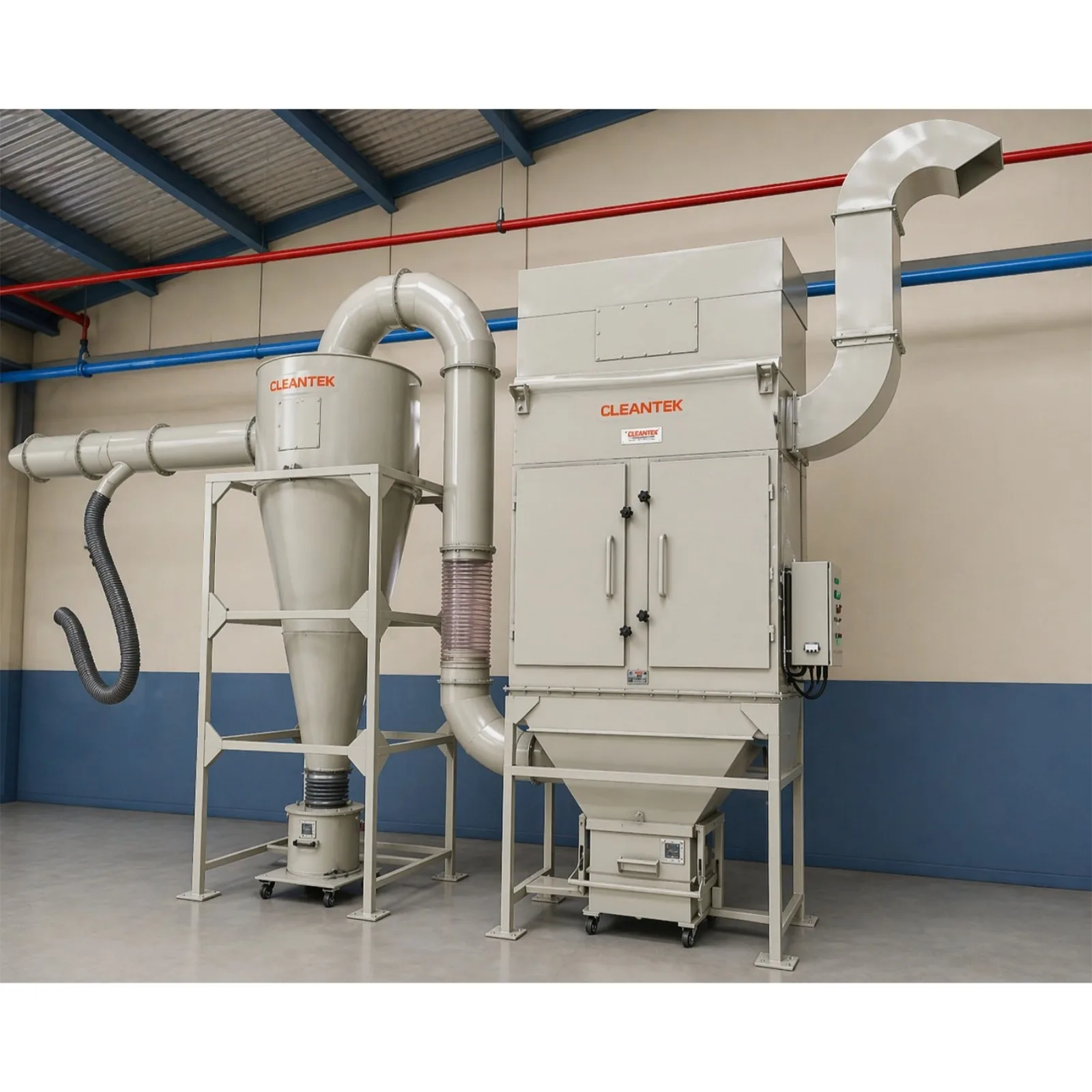
Activated carbon plants generate extremely fine black dust during:
• Crushing and grinding
• Screening
• Carbon transfer systems
• Packing and filling
• Material handling
• Furnace discharge systems
This dust is lightweight, airborne, and difficult to control using conventional systems.
Why Activated Carbon Plants Need Baghouse Filters:
• High-efficiency capture of micron-level dust
• Prevention of black dust spread across plant areas
• Reduced product loss and recovery of valuable carbon powder
• Improved housekeeping standards
• Cleaner and safer work environment
For activated carbon industries, correct filter media selection is extremely critical due to the fine particle size and dust loading characteristics.
Key Performance Advantages:
- Up to 99.9% Dust Collection Efficiency
Baghouse systems can effectively handle both fine and heavy particulate loads with excellent filtration performance.
- Continuous Operation
Automatic pulse jet cleaning ensures uninterrupted production without stopping the system.
- Low Maintenance
With proper engineering and correct filter media selection, maintenance costs are significantly reduced.
- Flexible for Multiple Applications
Suitable for foundries, activated carbon units, cement plants, steel industries, pharmaceuticals, and chemical plants.
Types of Baghouse Systems Used in Industry:
Pulse Jet Bag Filters:
• Most widely used
• Compact and highly efficient
• Suitable for continuous industrial processes
• Low downtime
• Ideal for foundries and activated carbon industries
Reverse Air Baghouses
• Suitable for high-temperature gas applications
• Used in large-scale process industries
• Effective for large air volume handling
Where Most Projects Go Wrong:
Many dust collection systems fail not because of poor equipment-but because of poor engineering.
Common mistakes include:
• Incorrect air volume calculations
• Poor hood and duct design
• Improper pressure balancing
• Wrong filter media selection
• No maintenance planning
• Undersized hopper discharge systems
These are engineering problems-not product problems.
Cleantek Approach - Engineering Before Equipment:
At Cleantek, we believe in design-first pollution control solutions rather than simply supplying machines.
Our focus is on delivering the right system-not just equipment.
Our Core Services
• System design and technical drawings
• Airflow and dust load calculations
• Retrofit and performance improvement
• Vendor-neutral equipment recommendations
• End-to-end technical consulting
• Foundry dust control solutions
• Activated carbon dust collection systems
We design systems that perform reliably for years.
Future Trends in Industrial Pollution Control:
• Stricter emission norms across India
• Increased MSME compliance requirements
• IoT-based emission monitoring systems
• Energy-efficient low-pressure-drop systems
• Integrated VOC + dust collection solutions
Pulse jet bag filters with optimized ducting and pressure balancing are gaining strong demand across Indian industries.
CLEANTEK Conclusion:
- Industrial pollution control is no longer a secondary function-it is a core business strategy.
- For foundries and activated carbon manufacturing industries, baghouse dust collectors remain the most effective solution because of their efficiency, flexibility, and long-term reliability.
- The real success lies not in simply installing a dust collector-but in engineering the right dust collection system.
- If your industry is planning a new installation or facing performance issues with an existing system, Cleantek can help design the right solution.
- Because industrial pollution control is no longer just compliance-it is strategy.
